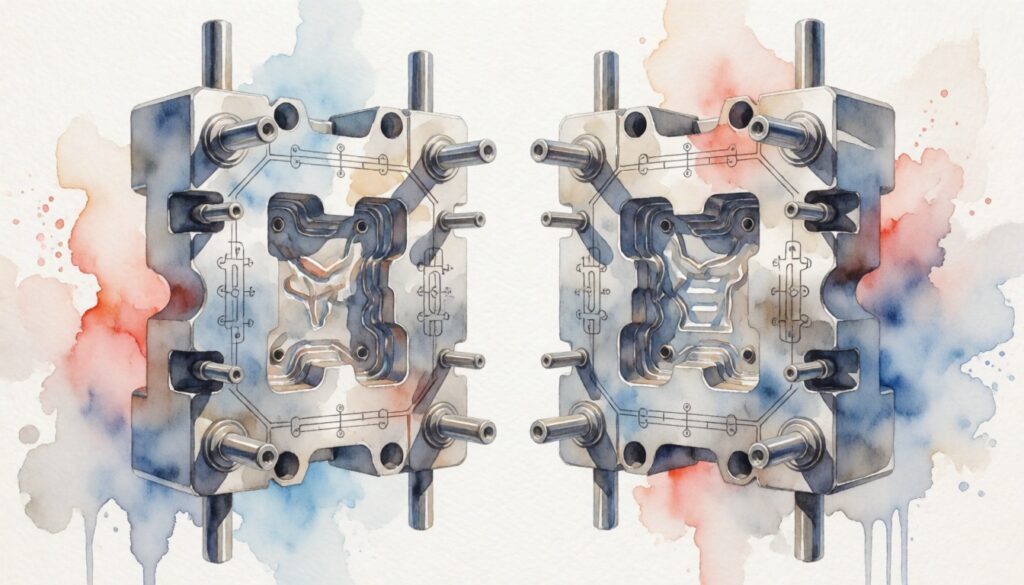
Introduction to How to Choose The Right Injection Molds For Plastic
When it comes to manufacturing high-quality plastic components, few decisions carry as much weight as selecting the right tooling. Understanding How to Choose the right injection molds for plastic is not just a technical detail — it is a strategic business decision that directly impacts production efficiency, product quality, and your bottom line. Whether you are launching a new product or optimizing an existing production line, the mold you choose will determine cycle times, part consistency, and long-term maintenance costs.
In 2026, the injection molding industry is evolving rapidly. Advanced engineering plastics, automated manufacturing processes, and data-driven quality control are reshaping what manufacturers expect from their tooling partners. COMEKIN has been at the forefront of this transformation, delivering precision-engineered plastic injection molds and comprehensive manufacturing solutions that help businesses scale with confidence.
Before diving into the selection process, it is essential to understand the foundational concepts. An injection mold is a specialized tool used to shape molten plastic into a desired part geometry. The mold’s design, steel quality, cooling system, and gating approach all influence the final product. Choosing the right mold requires balancing upfront costs against production volume, tolerance requirements, and expected part lifespan.
Why This Decision Matters in 2026
The demand for complex, lightweight, and durable plastic components continues to rise across industries such as automotive, medical devices, consumer electronics, and packaging. As product lifecycles shorten, manufacturers need molds that can be produced quickly, operate reliably, and adapt to design iterations without excessive retooling costs.
In this environment, how to choose the right injection molds for plastic becomes a question of agility as much as cost. A well-designed mold reduces material waste, speeds up cycle times, and ensures consistent dimensional accuracy across thousands — or millions — of parts. On the other hand, a poorly selected mold can lead to flash, warping, sink marks, and premature tool wear, resulting in costly downtime and scrap.
Market Trends Shaping Injection Mold Selection
Several trends are influencing mold selection in 2026. First, the adoption of high-performance engineering plastics requires molds with advanced cooling channels and optimized gate designs to manage higher melt temperatures and flow characteristics. Second, the rise of electric and hybrid vehicles has increased demand for large, structural plastic parts, pushing mold builders to create tools with greater precision and longer service life.
Third, digital manufacturing and simulation software now allow mold designers to validate gating, cooling, and venting strategies before steel is ever cut. This reduces trial-and-error and accelerates time to market. COMEKIN leverages these technologies to produce hardware molds and metal mold bases that meet the strictest industry standards.
Core Benefits & Strategic Importance
The benefits of mastering how to choose the right injection molds for plastic extend far beyond the production floor. A well-chosen mold directly influences customer satisfaction, brand reputation, and operational profitability. When your tooling performs reliably under demanding conditions, every downstream process becomes more predictable and more cost-effective.
Driving Targeted Audience Engagement
When your molds produce parts that consistently meet or exceed specifications, your customers notice. Dimensional accuracy, surface finish, and structural integrity are the physical proof of your manufacturing competence. For mold makers and injection molders, this translates into stronger client relationships, repeat business, and positive word-of-mouth referrals.
By partnering with a mold manufacturer that understands the nuances of mold design and material selection, you can offer your customers a level of quality that differentiates your brand in a crowded market. COMEKIN’s plastic injection molds are engineered to deliver superior performance across a wide range of applications, from consumer goods to precision industrial components.
Maximizing ROI and Conversion Efficiency
The cost of an injection mold is typically amortized over its production lifetime. A higher-quality mold with superior steel, precise machining, and efficient cooling may carry a higher initial price tag, but it will pay dividends through reduced cycle times, fewer defects, and lower maintenance costs. When calculating the true return on investment, you must look beyond the purchase price.
Key factors to evaluate include:
- Total expected production volume and mold lifespan
- Tolerance requirements and part complexity
- Anticipated maintenance and repair intervals
- Lead time for mold fabrication and design iterations
- Energy consumption and cycle time efficiency
Choosing the right mold means optimizing all of these factors together, not simply chasing the lowest quote. A slightly higher upfront investment in a well-engineered tool often delivers