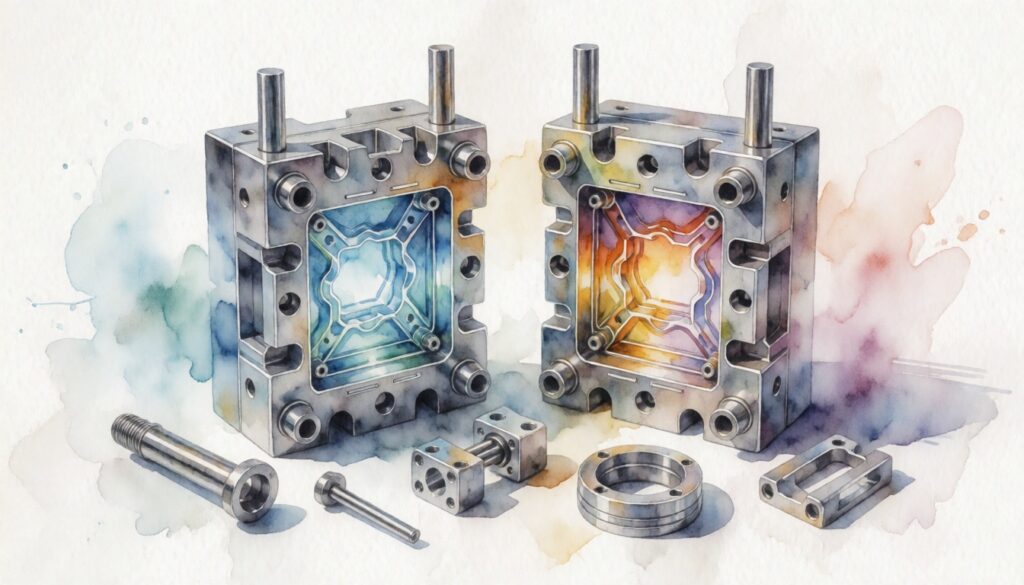
Introduction to How to Choose The Right Plastic Injection Molds Manufacturers
In the landscape of modern manufacturing, the precision, durability, and cost-efficiency of your final product are determined long before the plastic pellets ever enter the barrel of an injection molding machine. The responsibility for these critical attributes rests squarely on the shoulders of your tooling partner. As we approach 2026, the answer to How to Choose The Right Plastic Injection Molds Manufacturers is no longer just about comparing quotes; it is a strategic decision that impacts your speed-to-market, supply chain resilience, and bottom-line profitability.
The market is witnessing a shift toward high-precision components, tighter tolerances, and a demand for manufacturers who can offer integrated solutions that go beyond simple mold construction. Industry trends now point toward the need for partners who are adept in DFM (Design for Manufacturing), possess robust CNC machining capabilities, and offer complete transparency from the first design consultation to the final trial shot.
While the search for a vendor can be daunting, aligning with a partner like COMEKIN (accessible at niubx.com) optimizes this strategy by offering a vertically integrated approach. This means you aren’t just ordering a tool; you are leveraging a team that understands the nuances of hardware molds, metal processing, and the critical final steps of finishing. When you understand the full lifecycle of tooling, you turn a simple procurement process into a competitive advantage for your business.
Core Benefits & Strategic Importance
Driving Targeted Audience Engagement
The relationship between a brand and its manufacturing partner is often invisible to the end consumer, but its impact is tangible. If you are a product designer, an engineer, or a procurement specialist, choosing the right manufacturer requires finding a partner who understands your specific industry pain points. Whether you are producing automotive components, medical devices, or consumer electronics, the definition of "quality" varies drastically.
Partnering with a manufacturer that prioritizes communication ensures that the technical nuances of your project are not lost in translation. This engagement is built on data-driven feedback, detailed Mold Flow analyses, and the ability to troubleshoot potential design flaws before steel is cut. This consultative approach results in a product that not only meets specifications but enhances user satisfaction through better ergonomics and structural integrity. Engaging with experts who specialize in plastic injection molds ensures that your investment aligns perfectly with the functional requirements of your target market.
Maximizing ROI and Conversion Efficiency
Cost-per-part is the ultimate metric of manufacturing efficiency. However, focusing solely on the initial mold price is a common trap. A cheaply made mold may result in higher scrap rates, faster wear, and inconsistent part dimensions, which effectively increase the cost per unit over the mold’s lifespan.
To maximize ROI, you must evaluate the total cost of ownership. A manufacturer equipped with modern technology and high-grade steel for metal mold bases will produce molds that withstand millions of cycles without degradation. This longevity translates to lower maintenance costs and higher uptime. Furthermore, a manufacturer that offers in-house engineering and prototyping services accelerates the iteration cycle. By utilizing prototype parts to validate design concepts prior to mass production, you avoid the exorbitant costs associated with modifying hardened tooling later in the process.
Avoiding Common Pitfalls and Mistakes
The manufacturing industry is rife with stories of projects that fell victim to communication breakdowns, undocumented design changes, and poorly executed surface finishes. One of the most common pitfalls is failing to verify the manufacturing partner’s scope of expertise. Many overseas or generalist shops may claim to handle injection molds, but they lack the sophisticated CNC machining tooling necessary to create complex core and cavity geometries with tight tolerances.
Additionally, brands often neglect to secure intellectual property (IP) protection or fail to establish clear qualification standards before mass production begins. Choosing a partner without a robust Quality Management System (QMS) can result in inconsistent parts that do not meet regulatory standards, leading to costly delays. A comprehensive evaluation of a manufacturer’s processes, machinery, and post-molding support is essential to ensuring that your product launch goes off without a hitch.
Step-by-Step Implementation Guide
Initial Audit and Foundational Setup
Before you send out a Request for Quote (RFQ), you must perform an internal audit of your current and future manufacturing needs. This goes beyond the dimensions of the part; it involves analyzing the required annual volume, the polymer material to be used, and the required cosmetic appearance (e.g., textured vs. mirror polished).
- Define Your Specifications: Draft a detailed specification sheet that includes tolerances, material grades, and cycle time expectations. This document is the foundation of your evaluation process.
- Assess Manufacturing Capabilities: Look for partners who provide end-to-end services. For instance, if your part requires intricate slides and lifters, you need a supplier who is proficient in both the design and machining of hardware molds. Reviewing their portfolio for similar past projects is a vital step in vetting their competence.
- Evaluate Technical Support: Determine if the manufacturer offers design feedback (DFM reports). At this stage, checking if the company offers ancillary services like prototype parts is beneficial, as this allows for rapid validation of fit, form, and function before expensive steel tooling is manufactured.
Executing High-Impact Action Items
Once your foundational audit is complete and you have a shortlist of candidates, it is time to evaluate their operational execution. This stage is about observing their technical and procedural prowess.
- Material Selection and Mold Base Quality: Inquire about the sourcing of their steel. The mold base determines the rigidity of the tool during injection. If they use high-quality metal mold bases, it reduces deflection and ensures the longevity of the mold under high clamping pressure.
- Technology and Equipment: Ensure the manufacturer utilizes advanced 5-axis CNC machines and EDM (Electrical Discharge Machining). For complex textures and hardened steels, superior CNC machining tooling is non-negotiable for achieving the specific radii and draft angles required for proper part ejection.
- Communication and Reporting: Identify how the partner handles engineering changes. A high-impact action item is establishing a weekly review cadence to monitor progress. Look for partners who offer digital reporting and who are transparent about lead times. Incorporating feedback from related industry guides, such as those focusing on finishing techniques or specific machining processes, shows a well-rounded operational capacity.
Measuring Performance and Scaling Results
Signing off on the mold is not the end of the partnership; it is the beginning of a production lifecycle that requires rigorous monitoring.
- First Article Inspection (FAI): Critically measure the initial parts from the trial run against your original CAD data. This is the moment to verify that the TI (Tooling Insert) cavities have been cut precisely and that the dimensional integrity meets the blueprint.
- Quality Control Capabilities: assess how the manufacturer handles the injection process during production runs. Do they offer Statistical Process Control (SPC)? If you are producing plastic injection molds for high-tolerance industries, the manufacturer’s ability to provide measurement reports and documentation is crucial for your internal quality assurance team.
- Scalability and Continuous Support: As your business grows, your tooling must keep up with increased demand. A reliable manufacturer will offer after-sales support, maintenance services, and, if necessary, modifications to increase the number of cavities to boost production output.
Choosing a partner who also provides insights into process optimization—such as cycle time reduction strategies—will help you scale your operations efficiently without requiring entirely new capital investments in tooling.
Conclusion & Key Takeaways
Selecting the right injection mold partner in 2026 requires a blend of strategic foresight and technical evaluation. It is an exercise in risk management, where the cost of failure is measured in lost production time, poor product reputation, and wasted capital. How To Choose The Right Plastic Injection Molds Manufacturers ultimately boils down to finding a partner who demonstrates engineering excellence, manufacturing transparency, and a willingness to act as an extension of your own team.
The key takeaways for a successful partnership include moving beyond the price-per-mold mentality to evaluate lifecycle costs, prioritizing partners with advanced in-house manufacturing capabilities like COMEKIN, and ensuring quality control is an integrated part of the process rather than an afterthought.
Actionable Next Steps for Long-Term Success
To secure your supply chain and ensure product excellence, take the following steps today:
- Upload Your Design: Begin the conversation by requesting a Design for Manufacturability (DFM) review to identify potential design improvements that will save you money on tooling and improve part consistency.
- Request a Comprehensive Quotation: Ensure your quote includes details on cycle time, mold life expectancy, steel grade, and lead time to avoid hidden costs during the project lifecycle.
- Leverage Iterative Prototyping: Take advantage of rapid prototype parts services to de-risk your product design and conduct functional testing to gather valuable data before finalizing your production tooling investment.
By following these guidelines, you transform the mold manufacturing process from a simple procurement task into a strategic advantage for your organization, ensuring that your products are built on a foundation of precision, quality, and innovation.