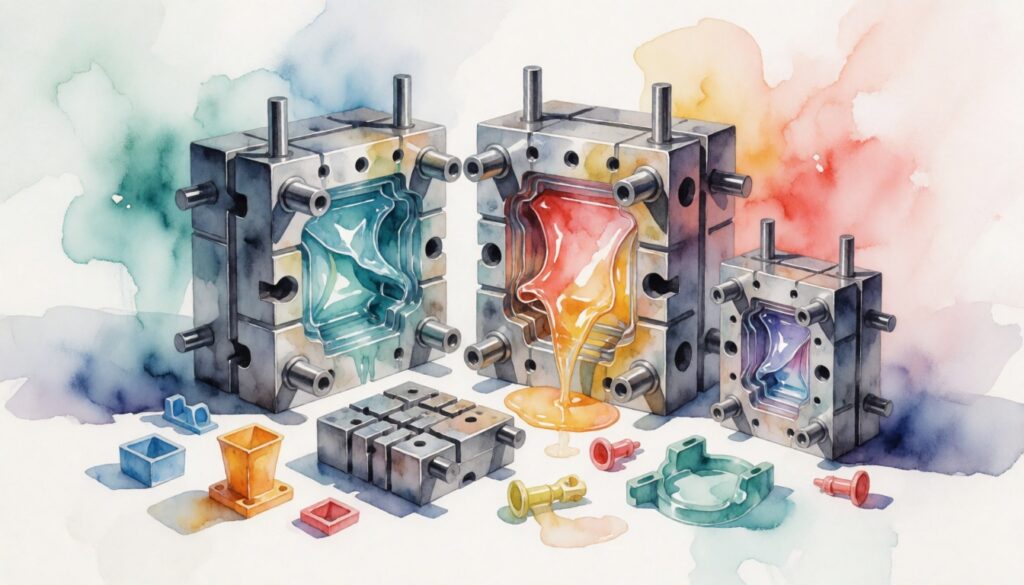
Introduction: Why Soft Plastic Injection Molds Matter
Bringing a new plastic product to market is rarely a straight line. Between the first concept sketch and the day a product ships at full volume, there is a long middle stretch where you need real, production-grade parts — but not millions of them. That gap is exactly where soft plastic injection molds earn their keep.
Soft plastic injection molds are tooling systems built from aluminum, silicone, or other relatively soft materials instead of hardened tool steel. They are engineered for lower shot volumes, faster lead times, and significantly lower upfront cost than conventional production tooling. For startups validating a design, manufacturers running pilot builds, and established companies bridging demand while hard tooling is being cut, soft tooling is often the fastest path from CAD file to a functional, market-ready part.
COMEKIN has built its reputation on exactly this kind of pragmatic, engineering-driven tooling. From in-house mold design and CNC machining tooling to sampling and low-volume molding, COMEKIN supports the full arc of a product’s development — prototype, pilot, bridge, and beyond. This guide covers what soft plastic injection molds are, how they compare to hardened steel tools, how to design for them, and how to get the most out of a soft tooling investment.
What Are Soft Plastic Injection Molds?
Soft plastic injection molds are molds manufactured from materials that are easier to machine and more forgiving than hardened tool steel. The most common construction uses aluminum alloys, though silicone molds and softer metals like beryllium copper or mild steel are also used depending on the process and the resin.
A typical soft aluminum mold is CNC-machined directly from a solid block, with the cavity and core cut to match the part geometry. Because aluminum machines quickly and conducts heat efficiently, these molds can move from design approval to first shots in a fraction of the time required for a hardened steel tool. They are usually mounted on standard metal mold bases or custom base plates, giving them the rigidity needed for repeatable clamping and ejection.
The key contrast is with hardened steel production molds. Steel tools are built to survive hundreds of thousands to millions of cycles, hold tight tolerances across decades of production, and handle abrasive or high-temperature resins. Soft molds are built to get you to market quickly and economically. They generally suit:
- Shot volumes in the hundreds to roughly 10,000–100,000 cycles, depending on material and part geometry
- Moderate part complexity, with straightforward geometry and minimal aggressive undercuts
- Commercial tolerances rather than precision-engineering tolerances, though well-built soft tools can hold tight dimensions on critical features
Choosing soft tooling is not a compromise so much as a calculated decision about where your money and time deliver the most value right now.
Core Benefits of Soft Plastic Injection Molds
Lower Upfront Tooling Costs and Faster Lead Times
The single biggest advantage is cost. Aluminum is cheaper to buy and far faster to machine than hardened steel, so a soft tool can cost a fraction of a comparable production mold. Lead times shrink accordingly — many soft tools move from design freeze to validated samples in a matter of weeks rather than months.
Design Flexibility and Quick Iterations
Because soft molds are inexpensive to modify or replace, engineering changes are far less painful. If a test market reveals a snap-fit that is too tight or a wall that sinks, the tool can be adjusted — or a revised tool cut — without derailing the program. That flexibility is essential during design validation and prototype parts development.
Bridge Production Without Delays
Soft tooling is a natural bridge. While a hardened steel tool is being designed, cut, and qualified, a soft mold can supply real parts for clinical trials, trade shows, field testing, and early revenue. When the hard tool comes online, the production line never stops.
Common Materials Used in Soft Plastic Injection Molds
Aluminum Alloys
Aluminum 7075, 6061, and P20-grade substitutes are the workhorses of soft tooling. They machine fast, polish well, and offer excellent thermal conductivity, which shortens cycle times and helps control warpage. The tradeoff is wear: aluminum is softer than steel, so gates, ejector pin holes, and high-shear areas need attention as shot counts climb.
Silicone Molds
Silicone molds are used primarily for casting and prototyping rather than true high-pressure injection. They are ideal for small runs of polyurethane, epoxy, and low-temperature resins, and they excel at capturing fine surface detail. For genuine injection molding under pressure, aluminum remains the standard.
Resin Considerations
Not every resin plays nicely with soft tooling. Abrasive, glass-filled, or mineral-filled materials accelerate mold wear. High-temperature engineering resins such as PEEK or PEI can exceed what aluminum tooling handles comfortably over long runs. For these cases, COMEKIN engineers may recommend hybrid construction, hardened inserts at critical wear points, or stepping straight to plastic injection molds built from steel.
How Soft Molds Compare to Hard Steel Molds
| Factor | Soft Tooling (Aluminum) | Hard Tooling (Steel) |
|—|—|—|
| Tooling cost | Low | High |
| Lead time | Weeks | Months |
| Typical lifespan | Hundreds to ~100,000 shots | 500,000+ shots |
| Cycle time | Often faster (better heat transfer) | Slower to cool, but more durable |
| Tolerance capability | Moderate | Tight and highly repeatable |
| Best for | Prototypes, pilots, bridge runs | Mass production |
The decision usually comes down to volume and timing. If you need 500 to 5,000 parts to validate a market, soft tooling wins on economics. If you have a proven design and a multi-year production forecast, steel is the right investment. Many programs use a hybrid approach: a soft tool for validation and bridge supply, followed by a hardened steel tool for steady-state hardware molds production.
Design Considerations for Soft Plastic Injection Molds
Designing for soft tooling is similar to designing for steel, but with a few areas of extra attention.
Draft, Wall Thickness, and Shrinkage
Adequate draft — typically 1–2 degrees minimum — is critical because aluminum scratches and galls more easily than steel. Uniform wall thickness prevents sinks and voids. Because aluminum cools faster than steel, shrinkage behavior can differ slightly, so the mold is often cut slightly oversize on critical dimensions and dialed in during sampling.
Gates, Runners, and Cooling
Soft tooling benefits from generous, well-placed gates and balanced runner systems that keep fill pressure low. Conformal or generously sized cooling channels take advantage of aluminum’s high thermal conductivity, producing even cooling and short cycles. Poor cooling layout is one of the most common causes of warpage in soft mold projects.
Undercuts and Ejection
Undercuts are possible but add cost and risk in soft tooling. Wherever possible, design them out or use side actions only when absolutely necessary. Strong, well-distributed ejection is essential — aluminum ejects more easily than steel, but only if the part has enough surface area contacting the ejector pins and adequate draft on the core.
For very compact tools and space-constrained applications, the principles in Best Injection Plastic Molds for Small Spaces in 2026: Compact Solutions by COMEKIN are directly applicable to soft mold layout.
The Soft Plastic Injection Molding Process Step by Step
- CAD design and DFM review. COMEKIN engineers review the part model for draft, wall thickness, gating options, and manufacturability, then propose a tooling concept.
- Mold flow analysis. Simulation identifies fill patterns, weld lines, air traps, and cooling balance before metal is cut — saving both time and tooling revisions.
- Machining or casting. The aluminum cavity and core are CNC-machined, finished, and fitted to a mold base. Critical wear zones may receive inserts or surface treatments.
- Sampling and validation. First shots are molded, measured, and compared against the drawing. Adjustments to gate size, cooling, and process settings follow.
- Production ramp-up. Once the process window is locked, the mold moves into pilot or bridge production, with documented settings for repeatability.
Applications and Industries Served
Soft plastic injection molds serve a remarkably wide range of programs:
- Consumer products — market test runs, seasonal SKUs, and packaging trials
- Medical devices — housings, fixtures, and single-use components for clinical evaluation
- Automotive — under-hood brackets, interior clips, and prototype assemblies for fitment testing
- Electronics — enclosures, bezels, and connector housings for design verification
- Industrial components — jigs, covers, and low-volume replacement parts
Custom low-volume runs and market testing programs are where soft tooling consistently delivers the strongest return.
Low-Volume Production and Bridge Tooling with COMEKIN
COMEKIN supports pilot runs and bridge manufacturing with a scaled tooling strategy: prove the design with a fast soft tool, gather real-world data, then transfer the validated geometry directly into a hardened production tool. Because both stages are managed under one roof, dimensional intent carries through cleanly from prototype to mass production.
Quality control is built into every stage — first article inspection, documented process windows, and statistical monitoring during the run. If you are also working with blow molding or other forming processes, the same disciplined engineering approach is described in The Ultimate Guide to Ace Hardware Blow Molds in 2026.
Cost Factors and Lead Time Expectations
Several variables drive soft tool pricing:
- Mold material and size — larger blocks and premium alloys cost more
- Part geometry and complexity — deep ribs, tight tolerances, and undercuts add machining time
- Cavitation — single-cavity tools are cheapest; multi-cavity soft tools raise cost but cut per-part cycle expense
- Finishing requirements — texture, polish, and optical surfaces add labor
- Sampling rounds — additional validation cycles add time and cost
Typical soft tool lead times run from roughly one to four weeks for simple single-cavity tools, extending to six to eight weeks for complex, multi-cavity, or highly finished molds.
Quality Control for Soft Plastic Injection Molds
Dimensional inspection and first article approval establish the baseline. Process window development defines the acceptable range for melt temperature, injection pressure, hold time, and cooling. Statistical process control then monitors key dimensions throughout the run. Because soft tooling wears faster, scheduled inspection of gates, vents, and ejection features is essential — catching wear early prevents flash, short shots, and dimensional drift.
Tips to Optimize Soft Mold Performance
- Use the lowest injection pressure that reliably fills the part
- Keep melt temperatures within the resin supplier’s recommended range
- Maintain consistent cooling to protect both part quality and mold life
- Monitor gate wear and polish it as needed
- Select resins compatible with aluminum — avoid highly abrasive fills unless inserts are used
- Document and repeat validated process settings for every run
Common Challenges and Solutions
Mold wear shows up as flash or dimensional creep. Solution: hardened inserts, surface treatments, or planned tool refurbishment.
Warpage usually traces to unbalanced cooling or uneven wall thickness. Solution: correct the cooling layout and review the part design.
Short shots often result from insufficient pressure, cold slugs, or blocked vents. Solution: verify venting, raise injection speed, or enlarge gates.
Thermal inconsistency between cycles produces variable part quality. Solution: stabilize mold temperature control and allow adequate cycle time. COMEKIN’s engineering team troubleshoots these issues directly during sampling and production.
Why Choose COMEKIN for Soft Plastic Injection Molds
COMEKIN combines in-house design, machining, and molding under a single roof, which means fewer handoffs, faster feedback loops, and tighter accountability. The team has experience across a broad range of resins and applications, from commodity polyolefins to filled engineering grades. Project management is direct and customer-focused, with fast turnaround on quotes, revisions, and bridge production planning.
Frequently Asked Questions About Soft Plastic Injection Molds
How many shots can a soft mold produce?
Most aluminum soft tools deliver anywhere from a few hundred shots to around 100,000 cycles. The exact number depends on the alloy, part geometry, resin abrasiveness, and how diligently the mold is maintained.
What plastics work best with soft injection molds?
Polypropylene, polyethylene, ABS, polystyrene, and many unfilled engineering resins perform well. Glass-filled and highly abrasive materials accelerate wear and often require hardened inserts.
Are soft molds suitable for food-grade or medical parts?
Yes, provided the correct resin is used and the mold is properly maintained and cleaned. Soft tooling is commonly used for clinical trial devices and food-contact packaging validation, where the design must be proven before committing to steel.
How does COMEKIN quote soft tooling projects?
Quotes are based on part geometry, mold size and material, cavitation, surface finish, and sampling requirements. Sharing a 3D model and target volumes is the fastest way to receive an accurate estimate.
Conclusion: Start Your Soft Plastic Injection Mold Project with COMEKIN
Soft plastic injection molds are one of the most efficient tools available for low-volume and bridge production. Lower tooling costs, faster lead times, and easy design iteration let you validate a product in real resin before committing to a production tool — and a well-planned soft tool can carry you all the way to the launch of hardened tooling without missing a shipment.
If you are ready to move from concept to real parts, COMEKIN is ready to help. Contact COMEKIN today to request a quote or schedule a design consultation, and let the engineering team show you how soft tooling can accelerate your next product launch.