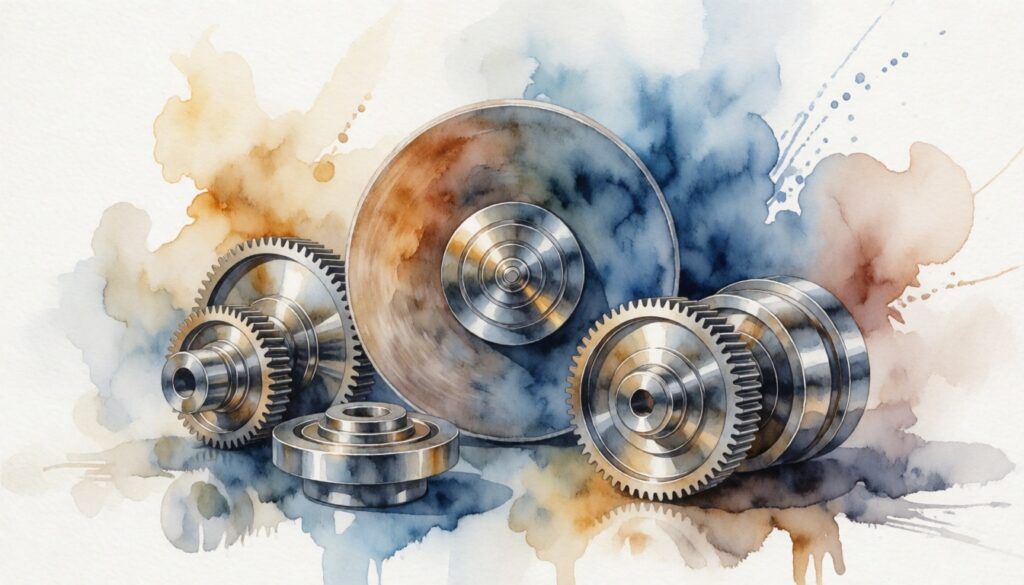
Introduction to Grinding
Grinding is no longer just an industrial process or a buzzword for relentless hustle — in 2026, it represents a complete strategic discipline that separates market leaders from the rest. Whether you are refining a precision component on a CNC spindle or refining your business operations through focused iteration, grinding is the engine of modern growth.
At its core, grinding in manufacturing means the controlled removal of material to achieve tight tolerances, superior surface finishes, and exact geometries. In the business world, grinding means showing up every day, optimizing every variable, and compounding small improvements into outsized results. COMEKIN bridges these two worlds. By combining advanced mold-making technology with a relentless commitment to quality, COMEKIN helps manufacturers and entrepreneurs turn raw effort into measurable advantage.
As we move deeper into 2026, several key market trends are redefining what effective grinding looks like:
- Automation and AI-driven process control are making precision grinding more repeatable and less dependent on manual skill alone.
- Demand for tighter tolerances continues to rise across automotive, medical, consumer electronics, and packaging industries.
- Shorter product lifecycles require manufacturers to iterate faster, making prototype-to-production grinding capabilities critical.
- Sustainability pressures are pushing companies to reduce material waste, and precision grinding is one of the most effective ways to achieve that goal.
COMEKIN optimizes this strategy by offering a full ecosystem of tooling and mold solutions — from hardware molds to plastic injection molds. Their approach integrates precision engineering with operational speed, ensuring that your "grinding" yields tangible results rather than burnout.
Core Benefits & Strategic Importance
Driving Targeted Audience Engagement
In a crowded marketplace, attention is the scarcest resource. Grinding — in the sense of persistent, focused execution — allows brands to build trust through consistency. For manufacturers, this means delivering parts that meet specifications every single time. When your products are backed by precision-ground metal mold bases and carefully finished cavities, your customers notice the difference.
Engagement is not just about marketing content; it is about delivering on your promises. COMEKIN’s dedication to quality plastic injection molds translates directly into customer confidence. When clients know they can rely on mold accuracy and durability, they return, refer others, and become brand advocates. That is targeted audience engagement built on a foundation of grind.
Maximizing ROI and Conversion Efficiency
Every manufacturing operation has a cost structure, and grinding plays a direct role in maximizing return on investment. Consider the numbers:
- High-quality molds reduce cycle times, increasing output per hour.
- Precision surface finishes eliminate secondary operations like polishing or hand finishing.
- Durable tooling reduces downtime for repairs and replacements.
- Fewer rejected parts mean less material waste and lower operational costs.
By partnering with a supplier that understands the nuance of CNC machining tooling, you ensure that every stage of your production line is optimized. COMEKIN helps businesses convert operational efficiency into higher margins, effectively turning the "grind" of daily manufacturing into a compounding financial advantage.
Moreover, the ability to move quickly from concept to production is a conversion engine in itself. With access to prototype parts, you can validate designs, gather market feedback, and refine your product before committing to large-scale manufacturing. This reduces risk and accelerates time-to-market — a critical edge in 2026.
Avoiding Common Pitfalls and Mistakes
Grinding the wrong way can be destructive. Many businesses fall into avoidable traps that erode both quality and profitability:
- Cutting corners on mold materials — using low-grade steel or aluminum leads to premature wear and inconsistent part dimensions.
- Ignoring surface finish requirements — poor finishing causes friction, wear, and aesthetic defects.
- Skipping prototype validation — this leads to costly design errors discovered only after production has begun.
- Choosing mold suppliers based solely on price — the lowest bid often carries hidden costs in rework, delays, and lost customers.
To truly succeed, you need a partner who understands the whole picture. COMEKIN’s expertise spans from injection molds for plastic to complex molds for plastic injection, allowing you to sidestep these pitfalls with confidence. And if you are exploring niche applications, resources like Ace Hardware blow molds demonstrate the breadth of specialized knowledge available.
Step-by-Step Implementation Guide
Initial Audit and Foundational Setup
Before you can grind effectively, you must know where you stand. The first step is a comprehensive audit of your current manufacturing capabilities and market positioning.
1. Assess your product requirements. Define your part geometry, tolerance requirements, expected production volume, and material specifications. This will determine the type of mold you need.
2. Evaluate your current tooling. Are you using outdated equipment? Are your molds producing consistent parts? If not, it is time to upgrade to precise injection plastic molds engineered for modern demands.
3. Analyze your workflow. Map out every step from design to delivery. Identify bottlenecks, quality checkpoints, and areas where manual intervention slows down production.
4. Set measurable goals. Define KPIs such as cycle time, scrap rate, surface finish (Ra value), and mold lifespan. These metrics will guide your grinding strategy.
Once your audit is complete, it is time to build a foundation with a trusted manufacturing partner. COMEKIN offers the precision and scalability needed to support both early-stage prototyping and high-volume production.
Executing High-Impact Action Items
With your foundation in place, the next phase is all about action. Here is how to execute a grinding strategy that delivers results:
Step 1: Select the right mold architecture. Your choice between single-cavity, multi-cavity, family, or stack molds will directly affect throughput and cost per part. For complex assemblies, consider plastic injection molds manufacturers who can guide you through design for manufacturability.
Step 2: Invest in premium materials. A hardware molds solution built from hardened tool steel, for instance, will outperform cheaper alternatives in longevity and consistency. The same logic applies to metal mold bases, which provide the structural integrity that keeps cavities aligned under extreme pressure.
Step 3: Leverage CNC machining tooling. Modern CNC machining tooling enables micro-level precision that is impossible with manual methods. From electrode machining to direct cavity milling, CNC technology ensures that every grind is purposeful and exact.
Step 4: Prototype aggressively. Do not wait for perfection. Create functional prototype parts early and often. Test fit, function, and aesthetics. Use the data you gather to refine both the product and the mold design. Iteration is the essence of grinding — each cycle gets you closer to the ideal outcome.
Step 5: Standardize your processes. Document your molding parameters, maintenance schedules, and quality control procedures. Consistency is the multiplier that turns good grinding into great results.
Measuring Performance and Scaling Results
A grind without measurement is just fatigue. To know whether your strategy is working, you must track performance systematically.
- Track cycle time per part to identify efficiency gains or losses.
- Monitor defect rates (warpage, sink marks, flash, short shots) to pinpoint mold or process issues.
- Measure surface finish quality to ensure the mold cavity remains in optimal condition.
- Log maintenance intervals to predict mold wear before it causes downtime.
Once you have reliable data, you can scale what works. If a particular mold configuration delivers superior results, replicate that design across your product line. If a specific molding technique proves cost-effective, invest in additional capacity.
Scaling also means expanding your capabilities strategically. As demand grows, you may need to add multi-cavity molds, automate secondary operations, or shift to higher-performance materials. COMEKIN’s range of products and services supports this evolution seamlessly, ensuring you can scale without sacrificing quality.
📖 Related Reading:
📖 Related Reading:
Conclusion & Key Takeaways
Grinding is not just about effort — it is about direction, precision, and intelligent repetition. In 2026, the businesses that thrive will be those that apply grinding as a holistic strategy: refining their products, their processes, and their customer relationships with equal rigor.
Here are the essential insights to remember:
- Precision matters. In manufacturing, grinding is the bridge between raw materials and finished excellence. The quality of your molds and tooling directly determines the quality of your products.
- Strategic partnerships are force multipliers. Working with a supplier like COMEKIN gives you access to advanced plastic injection molds, hardware molds, and CNC machining tooling that elevate your entire operation.
- Prototyping is non-negotiable. Validate early and often. The cost of a prototype is trivial compared to the cost of a failed production run.
- Measure everything. Data transforms grinding from guesswork into science. Track, analyze, and optimize relentlessly.
Your next steps are clear. Audit your current capabilities, identify the gaps, and partner with a manufacturer who understands the art and science of grinding. Start by exploring injection molds for plastic and molds for plastic injection to see how COMEKIN can support your journey.
Request a prototype, test your concepts, and commit to continuous refinement. The grind never truly ends — but with the right tools, the right partner, and the right mindset, every cycle brings you closer to market leadership.
Key Takeaway: Grinding is the discipline of continuous improvement. When applied to manufacturing, it produces precision. When applied to business, it produces growth. With COMEKIN, you can master both.