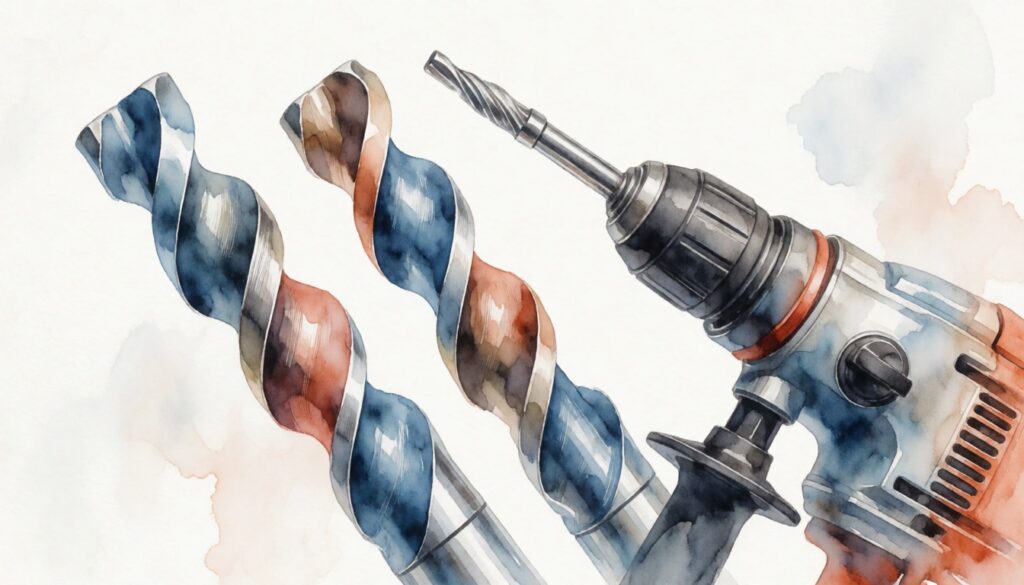
Introduction to SDS Drilling: The Complete Guide to SDS-Plus and SDS-Max Bits | COMEKIN
SDS drilling is the standard by which every concrete, masonry, and stone drilling job is judged. If you have ever watched a rotary hammer chew through reinforced concrete in seconds, you have witnessed the SDS system at work. The letters stand for Steck-Dreh-Sitz — roughly "insert, twist, seat" in German — and the design was popularized by Bosch in the mid-1970s as a way to transfer hammer energy into rock-hard material without the chuck slipping, binding, or losing grip under recoil.
Today, SDS Drilling: The Complete Guide to SDS-Plus and SDS-Max Bits | COMEKIN is more than a product category. It is a framework for choosing the right shank, the right bit geometry, and the right drilling parameters so that every hole is dimensionally accurate, dust-controlled, and ready for anchors, rebar, or structural fasteners.
Understanding Why SDS Drilling: The Complete Guide to SDS-Plus and SDS-Max Bits | COMEKIN Matters for Modern Growth
Construction, infrastructure repair, utility installation, and industrial maintenance all depend on predictable hole quality. A hole that is oversized, tapered, or blown out at the base will not hold a chemical anchor correctly. A hole drilled with the wrong bit will burn out carbide tips, crack tile, or destroy the hammer mechanism inside the tool.
For manufacturers and product developers, the SDS ecosystem also represents a supply chain opportunity. Bits, chucks, dust-extraction collars, and adapter sleeves are precision parts. Companies that build Hardware molds and Plastic Injection Molds for power-tool accessories must hold tolerances that keep the shank seated firmly while still allowing the free axial travel that makes SDS work.
Key Market Trends and Foundational Concepts
Several trends are shaping how SDS drilling is specified in 2026:
- Cordless dominance. High-voltage battery platforms now deliver enough impact energy to rival corded rotary hammers, which means bit quality — not tool power — is increasingly the limiting factor.
- Dust regulation. OSHA silica rules in the United States and similar standards worldwide have made integrated dust extraction and vacuum-compatible bits standard equipment rather than optional add-ons.
- Multipurpose and rebar-cutting bits. Four-cutter carbide heads that can handle concrete, brick, block, and light rebar in a single pass reduce tool changes on the jobsite.
- Sustainability and reconditioning. Bit resharpening programs and repairable tooling reduce consumable waste.
- Precision manufacturing at scale. Molded polymer components, machined steel shanks, and hardened inserts all require capable CNC machining tooling to produce consistently.
The foundational concepts every user should understand are simple:
- Hammer energy transfer depends on the shank interface, not just motor output.
- Shank size determines load capacity, which in turn determines the maximum bit diameter you can safely run.
- Carbide geometry controls cutting speed, hole roundness, and bit life.
- Flute design controls dust evacuation, which controls heat and, ultimately, tool life.
How COMEKIN Optimizes This Strategy
COMEKIN approaches SDS drilling from the manufacturing side. Rather than treating bits and accessories as commodity items, the company applies the same discipline used in Metal mold bases and precision tooling: controlled tolerances, verified heat treatment, and repeatable production. That matters because an SDS shank that is 0.1 mm out of spec will wobble, leak hammer energy, and destroy a chuck over time.
COMEKIN also supports developers who need to validate new accessory designs before committing to production tooling. Prototype parts allow engineers to test a dust collar, a bit holder, or a custom chuck design in real-world conditions before investing in full-scale molds.
Core Benefits & Strategic Importance
Driving Targeted Audience Engagement
Precision drilling attracts a highly specific audience: professional contractors, facility maintenance teams, electricians, plumbers, and industrial fabricators. These users do not search for vague inspiration — they search for answers. They want to know which shank fits their hammer, what diameter a concrete anchor requires, and why their bit keeps breaking.
An authoritative SDS resource answers those questions directly, with specifications, comparisons, and clear guidance. That is how you earn trust, backlinks, and repeat visitors who return every time a new drilling problem appears.
Maximizing ROI and Conversion Efficiency
SDS drilling economics are straightforward:
- Bit life drives cost per hole. A premium carbide tip that drills 40% more holes at the same price is a measurable saving.
- Downtime is the biggest cost. A snapped bit in a structural wall can cost hours of labor.
- Correct tool pairing prevents equipment failure. Running an SDS-Max bit in an SDS-Plus hammer is a guaranteed way to destroy the tool.
When buyers understand these trade-offs, they stop shopping on unit price alone. That shift is exactly what improves conversion efficiency for well-built products supported by real technical content.
Avoiding Common Pitfalls and Mistakes
Most SDS failures trace back to a handful of recurring errors:
- Using the wrong shank. SDS-Plus, SDS-Max, SDS-Top, and Spline Drive are not interchangeable.
- Running too much RPM. Concrete bits cut best at low rotational speed with full hammer action.
- Skipping the pilot hole. Large diameters in hard aggregate benefit from a smaller pilot hole first.
- Drilling through rebar. Hitting steel with a standard masonry bit dulls or shatters the carbide.
- Ignoring dust. Dust-packed flutes overheat the tip and can seize the bit in the hole.
- Never greasing the chuck. SDS shanks need light lubrication to travel freely under hammer load.
- Reusing worn bits. A worn carbide tip produces an undersized, bell-shaped hole that anchors cannot grip.
Step-by-Step Implementation Guide
Initial Audit and Foundational Setup
Before drilling anything, establish the parameters:
- Identify the hammer class. SDS-Plus for rotary hammers up to roughly 4 kg; SDS-Max for heavy breakers and larger hammers.
- Confirm the anchor or fastener specification. Hole diameter, embedment depth, and hole tolerance come from the anchor manufacturer, not from guesswork.
- Inspect the substrate. Concrete, brick, block, tile, and stone each call for different bit geometry.
- Match the bit diameter to the shank capacity. Oversized bits in undersized shanks cause bit breakage and chuck wear.
- Verify dust extraction. Use a vacuum-compatible bit or an integrated extraction shroud wherever silica dust is present.
- Check the chuck and shank. Worn chucks or burred shanks waste hammer energy on every stroke.
Executing High-Impact Action Items
- Mark and center-punch every hole location to prevent bit walk on smooth surfaces.
- Set the depth stop using a depth gauge or tape flag so anchors seat correctly.
- Start at low RPM until the bit establishes a centered groove, then apply steady feed pressure — let the hammer do the work.
- Use the hammer-only mode for chisels and the drill-plus-hammer mode for drilling.
- Clear dust with a vacuum or blow-out bulb, never by forcing the bit deeper.
- Back the bit out periodically on deep holes to evacuate debris.
- Stop immediately if you hit rebar. Switch to a rebar-cutting bit or relocate the hole.
- Let the bit cool between holes; rapid heat cycling shortens carbide life.
- Clean and grease the shank at the end of every session.
Measuring Performance and Scaling Results
Track the metrics that actually matter:
- Holes per bit by material class and diameter.
- Average drilling time per hole, which reveals whether you are running the correct RPM and feed pressure.
- Hole diameter accuracy, checked with a caliper or go/no-go gauge.
- Anchor pull-out test results, the ultimate proof of hole quality.
- Tool service intervals, which lengthen dramatically when shanks are kept clean and bits are matched correctly.
Once these baselines exist, scaling becomes a procurement decision. Standardize on a small, well-understood set of bits per hammer class, buy in verified production batches, and rotate stock so that worn bits are retired before they cost you a job. For organizations designing their own accessories, working with a partner that handles Plastic injection molds and machined hardware means new SKUs can go from concept to shelf without compromising tolerance. For a broader look at hole-making methods across materials, see the reference on Drilling: Types, Methods, and How COMEKIN Provides High-Performance Drilling Solutions.
Conclusion & Key Takeaways
Summary of Essential Insights
- SDS is an energy-transfer system, not just a shank shape. The free axial travel of the bit is what makes rotary hammer drilling efficient.
- SDS-Plus and SDS-Max are not interchangeable. Shank diameter and groove count determine load capacity and maximum bit size.
- Bit quality determines cost per hole. Carbide grade, tip geometry, and flute design matter more than motor wattage.
- Dust control is both a safety requirement and a performance requirement.
- Hole accuracy is measurable. If you are not checking diameter and depth, you are not controlling anchor performance.
- Precision manufacturing is the foundation. Consistent shanks and durable accessories come from controlled tooling, whether that means CNC machining tooling, a Metal mold base, or a production-grade Hardware mold.
Actionable Next Steps for Long-Term Success
- Audit your current bit inventory and discard anything with a dulled, chipped, or rounded carbide tip.
- Standardize on the correct shank class for each hammer in your fleet.
- Adopt a dust-extraction routine on every job, indoors and out.
- Train your team on RPM, feed pressure, and depth control — the three variables that decide bit life.
- Record holes-per-bit data for a month and use it to justify better consumables.
- Partner with a manufacturer that treats drill accessories as precision components, not commodities, so your specification holds from prototype through full production.
SDS Drilling: The Complete Guide to SDS-Plus and SDS-Max Bits | COMEKIN comes down to one principle: match the shank, match the bit, and control the process. Get those three right, and every hole you drill will hold exactly what you intend it to hold — for as long as you need it to.