What Is Drilling and Why Does It Matter?
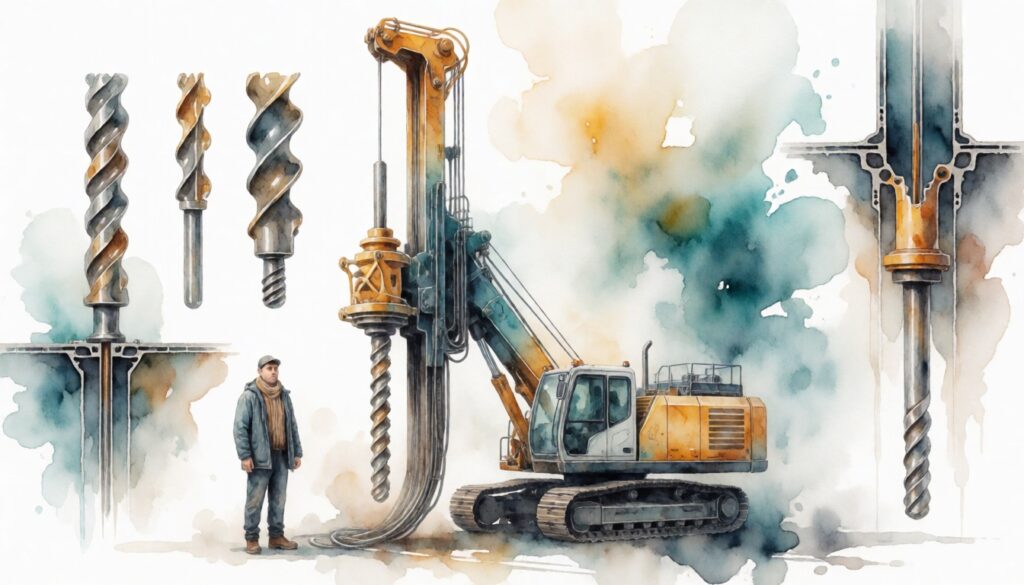
Drilling is the process of creating precise cylindrical holes in the earth to support exploration, resource extraction, construction, and infrastructure development. It is one of the most fundamental operations behind modern civilization — from the water wells that supply communities to the oil and gas reservoirs that power industry.
Every day, drilling teams around the world rely on heavy equipment to penetrate rock layers and sediment in search of energy, minerals, groundwater, and geotechnical data. The energy sector uses drilling to produce oil and natural gas. Mining companies drill to map mineral deposits and extract valuable ores. Construction crews drill to install foundations, pilings, and ground anchors. Meanwhile, geotechnical engineers depend on core drilling to assess soil and rock stability before major building projects begin.
Given how many industries depend on drilling, the quality of the tools and components used on a rig can make the difference between a smooth, profitable project and an expensive failure. That is why the sourcing of reliable drilling equipment — and the manufacture of precise replacement parts — is just as critical as the drilling process itself.
Main Types of Drilling Methods
No single drilling method works for every formation. The geology, depth, and purpose of the borehole determine which technique is most effective. Here are the main types of drilling methods used today:
Rotary Drilling
Rotary drilling is the most widely used method for oil, gas, and water wells. A rotating drill bit, connected to a drill string, grinds and cuts through rock under constant downward pressure. Drilling fluid — commonly called mud — is pumped down the drill pipe, out through the bit, and back up the annulus to cool the bit, control formation pressure, and carry rock cuttings to the surface.
This method is fast, versatile, and adapts well to varied rock hardness, making it the backbone of most deep-well operations.
Percussion and Impact Drilling
Percussion drilling, also known as impact or cable-tool drilling, creates holes by repeatedly lifting and dropping a heavy bit to fracture rock. While slower than rotary drilling, it is highly effective for shallow, small-diameter wells and for penetrating hard rock where rotary methods are less efficient. It is often used for water wells, environmental monitoring, and geotechnical sampling.
Diamond Core Drilling
Diamond core drilling uses a cylindrical bit embedded with industrial-grade diamonds to cut a circular annulus into rock, leaving an intact rock core inside. This method delivers the highest-quality samples for geological analysis and is essential for mineral exploration, where the structural integrity of the sample directly informs investment and mining decisions.
Directional and Horizontal Drilling
Directional drilling allows operators to angle the borehole to reach targets that are not directly beneath the drilling site. Horizontal drilling, a subset of directional drilling, is widely used in shale gas and oil production. By curving the well path, operators can access a much larger reservoir area from a single surface location, reducing land disturbance and improving project economics.
Essential Drilling Equipment and Components
Behind every successful drilling project is a carefully selected set of equipment designed to handle the stresses of deep, high-pressure environments. The main components include:
- Drill rigs: From compact portable units for water wells to massive industrial platforms for offshore or deep onshore wells.
- Drill bits: Roller cone, PDC (polycrystalline diamond compact), diamond, and carbide bits, each matched to specific formations.
- Drilling fluids: Water-, oil-, or synthetic-based systems that cool the bit, stabilize the borehole, and suspend cuttings.
- Casing and cementing materials: Steel casing and cement seals that maintain borehole integrity and protect groundwater aquifers.
The performance of these components depends on precision manufacturing. Threaded connections, seals, and wear parts must meet exact tolerances to avoid equipment failure and expensive downtime. That is why many operators turn to specialized manufacturers for durable, custom-engineered components. For instance, high-quality hardware molds and precisely machined parts are built using the same rigorous quality standards that the drilling industry expects. Even supporting tools like CNC machining tooling play a hidden but essential role: they create the custom fixtures and precision components used to fabricate reliable drilling equipment.
The Drilling Process Step by Step
While every project is unique, the drilling process follows a predictable sequence. Understanding these stages helps operators plan better, reduce risk, and keep projects on schedule.
1. Site Preparation
Before the rig arrives, the site must be surveyed, cleared, and graded. Operators also locate underground utilities and assess road access. Environmental permits and safety plans are reviewed, and the drilling pad is prepared to support the weight of the rig and the drill string.
2. Spudding and Drilling Ahead
Spudding marks the moment the drill bit first cuts into the ground. As the borehole deepens, operators run casing sections to stabilize the hole and prevent collapse. Throughout drilling, they continuously monitor depth, angle, torque, and pressure. Adjustments to drilling fluid density and drill bit selection are made in real time based on formation changes.
3. Drilling Fluid Management
Drilling fluids circulate continuously. They are treated with additives to maintain viscosity and density, and they pass through solids-control equipment that removes rock cuttings so the fluid can be reused. Fluid management is a major cost center, and efficient handling can significantly reduce project expenses.
4. Well Completion
Once target depth is reached, the final stages include well logging to characterize the formation, cementing the casing to seal the annulus, and installing production or monitoring equipment. Proper completion turns a drilled hole into a productive asset.
For drilling companies that rely on custom tooling and replacement parts, working with a partner that offers metal mold bases and precision-manufactured components ensures a steady supply of durable, dimensionally accurate equipment parts, even in remote locations.
Drilling Safety and Environmental Best Practices
Drilling carries inherent risks — high pressures, heavy equipment, and hazardous formations. Protecting crews and the environment requires disciplined procedures:
- Conduct thorough risk assessments before spudding and at each critical stage of the well.
- Use blowout preventers (BOPs) when drilling high-pressure zones to quickly seal the well if control is lost.
- Maintain personal protective equipment (PPE), perform regular rig inspections, and provide continuous crew training.
- Manage drilling waste responsibly, including cuttings and fluid disposal, to satisfy environmental regulations and minimize surface impact.
Pro Tip: An experienced drilling partner treats safety and environmental stewardship as non-negotiable values — not just compliance checkboxes. This culture protects your crew, your reputation, and your bottom line.
How to Choose the Right Drilling Partner
Selecting the right partner is one of the most consequential decisions you will make for any drilling project. A strong partner brings far more than a rig:
- Experience and track record: Look for a partner with field-proven results in your specific industry and geological setting.
- Equipment quality: Inspect their fleet and insist on well-maintained, modern machinery supported by reliable spare parts.
- Safety and compliance: Review their EMR scores (experience modification rating), certifications, and environmental compliance history.
- Technical support and maintenance: Confirm they offer responsive after-sales support, on-site service, and reliable supply channels for consumables and replacement components.
In many fast-paced drilling operations, even small delays from component failure or supply gaps can cost thousands of dollars per hour. That is why supply reliability is a critical criterion. Manufacturers that also support prototype development can help operators test and refine custom tooling before full-scale production. Many leading operators use prototype parts to validate new downhole tool designs quickly and economically, avoiding costly redesigns later.
Drilling Solutions from COMEKIN
At COMEKIN, we understand that drilling success depends on more than just the bit — it depends on a complete ecosystem of high-quality, precisely manufactured products and components. We serve demanding industries where performance, durability, and reliability are non-negotiable.
Our team supports you across the entire product lifecycle, from project planning and material selection to customized manufacturing and after-sales service. Whether you need durable components for drilling equipment, precision-machined parts, or custom fabrication, COMEKIN delivers solutions that keep operations moving forward.
Because drilling operators often face extreme temperatures, abrasive formations, and heavy mechanical loads, the components used in their equipment must meet exacting standards. The same manufacturing disciplines that produce precision plastic injection molds and components are applied to every product we ship. And for companies that need long production runs of molded components — including sealing elements, housings, or tooling components — our expertise in injection plastic molds and molds for plastic injection provides cost-efficient, high-volume solutions that maintain tight tolerances.
For example, our expertise in creating compact, precision-molded parts is highlighted in our guide to best injection plastic molds for small spaces in 2026. The same precision goes into the molds we build for demanding industrial uses, including drilling components. We also manufacture components where exact surface finishes and dimensional accuracy are critical — quality that operators can depend on day after day.
Even beyond molds, our machining and finishing processes align with the standards discussed in our ultimate guide to grinding in 2026, ensuring every mating surface and connection performs exactly as specified. And for decorative or identification components used in equipment branding, we have worked extensively with techniques ranging from standard fabrication to specialty processes featured in our Ace Hardware blow molds article.
With COMEKIN, you get more than a parts supplier. You get a strategic partner focused on reducing downtime, improving drilling productivity, and delivering the high-performance solutions your projects demand. Whether you are planning a new water well, a mineral exploration program, or a hydrocarbon production campaign, we are ready to help you drill smarter, safer, and more profitably.
📖 Related Reading:
📖 Related Reading: