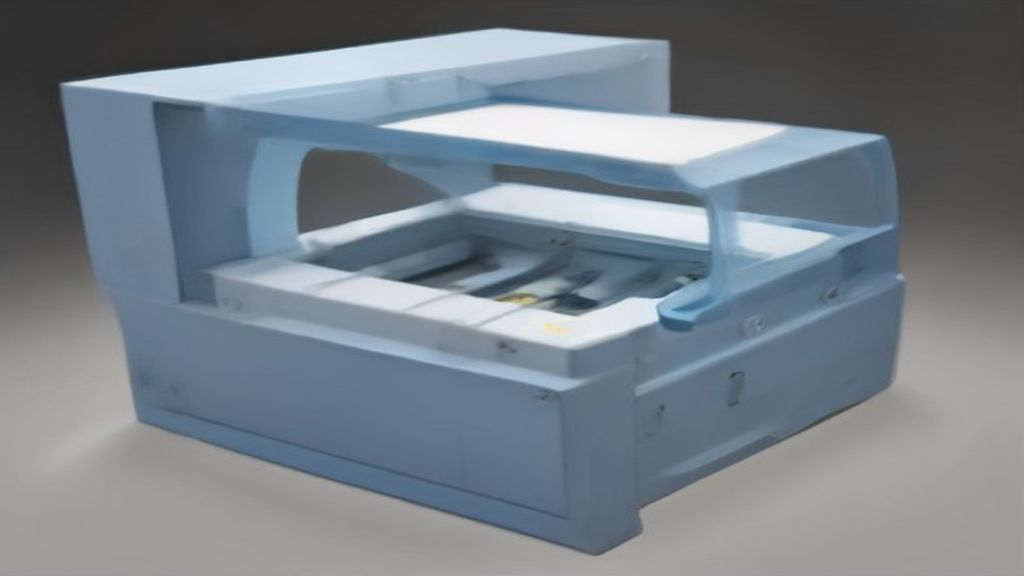
Introduction to Best Molds For Plastic Injection For Small Spaces 2026
The manufacturing landscape in 2026 is defined by a paradox: production demands are scaling up while physical footprints are shrinking. As startups, R&D labs, university engineering departments, and even established manufacturers look to bring products to market faster, the need for compact, high-precision tooling has never been greater. That’s precisely where the search for the Best Molds For Plastic Injection For Small Spaces 2026 becomes not just a shopping query, but a strategic business decision.
Small-space plastic injection molding refers to the design and deployment of molds and molding systems engineered to fit into limited workshop areas, compact production cells, or lean prototyping environments. These aren’t just "small molds" — they represent a complete philosophy of efficient manufacturing: reduced footprint, optimized cycle times, quick-change tooling, and integration with benchtop or mini injection molding machines.
Modern growth for forward-thinking companies increasingly hinges on this approach. Instead of assuming that high-volume manufacturing requires sprawling factory floors, brands like COMEKIN have recognized that mold designs can be miniaturized and modularized without sacrificing durability or tolerances. Foundational market trends—such as micro-manufacturing, just-in-time production, localized supply chains, and low-volume to mid-volume bridge production—have accelerated the movement toward space-conscious tooling. In fact, the compaction of plastic injection molds is now a recognized metric for operational agility.
COMEKIN optimizes this strategy by pairing pragmatic engineering with advanced CNC capabilities. They offer Hardware molds and Plastic injection molds that are explicitly designed for smaller, smarter layouts. Whether you’re building a mold for a single-cavity prototype or a multi-cavity production tool that fits inside a 2-meter clean room enclosure, COMEKIN’s engineering team applies DFM (Design for Manufacturing) principles that eliminate wasted space, wasted material, and wasted time.
Core Benefits & Strategic Importance
Choosing the right compact mold system is not about simply shrinking a large tool and hoping it performs. It’s about intentional design built around spatial efficiency and throughput. The Best Molds For Plastic Injection For Small Spaces 2026 deliver measurable advantages that directly impact your bottom line.
Driving Targeted Audience Engagement
For companies serving niche audiences—medical device developers, electronics enclosure producers, and makers of compact consumer goods—spatial capability matters. When you can advertise that your facility supports complete in-house injection molding even with severe floor constraints, you position yourself as an agile partner. Customers care less about the size of your factory and more about the speed and precision of your response. Integrating compact tooling solutions with Prototype parts permits you to engage early-stage clients who need iteration before committing to production volumes. The ability to cycle a mold, tweak the cavity, and cycle again without dedicating an entire manufacturing bay to the task is a powerful engagement tool.
Maximizing ROI and Conversion Efficiency
Floor space is expensive. By selecting the Metal mold bases and inserts built for compact configurations, you effectively reduce your capital overhead. Smaller molds can be mounted on smaller tonnage presses that consume less energy, require less floor reinforcement, and often carry lower purchase or lease costs. When you factor in reduced machine cycle times combined with rapid tooling changeovers, your ROI grows meaningfully. Conversion efficiency in lean manufacturing is measured by how quickly raw material becomes finished parts—and a well-planned compact tool reduces handling, decreases in-process inventory, and ships more parts per square foot than traditional setups.
Avoiding Common Pitfalls and Mistakes
The fastest way to fail in small-space molding is to underestimate the relationship between cooling, ejection, and part geometry. Many first-time designers attempt to compress a mold without adjusting the runner system, which results in uneven fill and flash. Another frequent error is underestimating the need for truly parallel and rigid platens, especially if your selected injection molding machine has limited tie-bar spacing. Instead, successful compact designers work with a partner who understands the tolerances required. COMEKIN’s background in CNC machining tooling enables incredibly consistent plate spacing, polished cavities, and precision alignment features—so your mold interacts seamlessly with your small press.
Step-by-Step Implementation Guide
Understanding what the Best Molds For Plastic Injection For Small Spaces 2026 can do is one thing; implementing them successfully is another. Follow this phased roadmap to ensure you’re set up for high-volume performance within a small footprint.
Initial Audit and Foundational Setup
1. Quantify Your Space and Press Constraints.
Measure your available floor space, ceiling height, power availability, and access paths. Document the clamp tonnage range of your existing or planned small presses. Establish the maximum mold dimensions you can comfortably handle.
2. Define Your Part Geometry and Tolerance Budget.
Not all parts are suited for compact molds. Determine wall thickness, draft, and surface finish requirements. Identify critical dimensions that will require tighter tolerance control and design your gating strategy around them.
3. Choose the Right Mold Construction Standard.
For compact environments, standard mold bases with quick-change capabilities deliver superior value. Discuss with your COMEKIN liaison whether Hardware molds with hardened tool steel inserts are needed or if pre-hardened steel suffices for your expected run volume. The answer will significantly influence your space and maintenance plan.
4. Create a Virtual Layout.
Before cutting steel, develop a Digital Mock-Up (DMU) that represents the physical layout of the molding cell—including the press, auxiliary equipment, robot or operator access, and mold storage racks adjacent to the machine.
Executing High-Impact Action Items
Invest in a Universal Mold Base System.
Perhaps the single most effective high-impact step is to standardize on a family of universal mold base frames, allowing all inserts to fit one or two master bases. This strategy decreases the physical storage space required for Metal mold bases dramatically. It also cuts setup time from hours to minutes, since the master base remains in the press while only the insert cassette is swapped.
Optimize Cooling Circuits for High Density.
Since the compact mold has less volume, cooling channels must be positioned with surgical precision. Conformal cooling channels created through advanced manufacturing processes—like the ones COMEKIN designs with their CNC machining tooling—shorten cycle times and remove hotspots, which is critical when running high-production schedules through a small area.
Select an Efficient Runner Design.
Simplify the system. For small-space mold tools expected to run unattended or semi-automated, choose hot runner systems or externally heated sprues only when necessary. In many scenarios, a cold runner engineered for recyclable, self-degating geometry is more than sufficient and keeps the mold footprint smaller.
Integrate Automated Part Removal with Right-Sized Robots.
Adopt a robot or a simple pick-and-place arm that handles both runner and part extraction. The key is selecting automation equipment that works within the mold open height and does not extend beyond the machine’s footprint envelope. Fully automated cycles allow continuous operation, improving your effective utilization dramatically.
Measuring Performance and Scaling Results
Success in small-space injection molding is measurable. Begin by tracking key operational metrics using a weekly or monthly review format.
- Mold Changeover Time: Record the time required from the last quality part of one run to the first good part of the next. Aim to reduce this by 15–20 percent each quarter.
- Square-Foot Efficiency: Calculate monthly production yield divided by the floor space dedicated to molding operations. A rise in this metric validates your compact tooling investment.
- Scrap and Rework Rates: Evaluate the ejection and dimensional consistency of the molded parts. Single-digit rejection rates are the standard; anything higher points to an issue in the gate design or cooling strategy.
- Cycle Time to Part Ratio: Benchmark your average cycle time against expected cycle time for the given part depth and material. Use the data to investigate whether a conformal cooling revision or better venting could improve performance.
Once a stable system is achieved, scale your results using a replicable model. Instead of moving to a huge press for a new product, consider duplicating compact molding cells. By adding second small-scale cells in a modular fashion, you can respond quickly to increased order volume without a costly plant relocation.
Start prototyping your next run without waiting for mass-tooling approval. Download the design file and iterate on an existing mold platform with Prototype parts. This approach offers real-world material shrinkage data prior to production. Use these parameters in any feed calculations for future iterations of the Plastic injection molds you intend to deploy across your factory.
Additionally, for any auxiliary machining steps needed around your mold inserts — whether it’s treating exterior parting lines, drilling angled holes, or creating custom shut-offs — ensure your supplier has the advanced manufacturing background to handle complex geometries. A strong familiarity with precision processes like angular grinding or conventional grinding ensures each Hardware molds component complements the whole system. Review COMEKIN’s approach to The Ultimate Guide to Angular Grinding in 2026 and The Ultimate Guide to Grinding in 2026 to understand what tolerance-mongering production support looks like.
If you’re planning the machining of deep cavities, cooling lines, or ejector holes within compact molds, you may also want to examine Drilling: Types, Methods, and How COMEKIN Provides High-Performance Drilling Solutions. Successful mold manufacturing with reduced space constraints relies heavily on the accuracy of both drilling and grinding operations. When these foundational steps are executed correctly, the final mold assembly fits within its intended small footprint without hitting interference.
And for those beginning to search for a partner, it always pays to review frameworks around selecting specialists. Before signing any supplier agreement, study The Ultimate Guide to How To Choose The Right Plastic Injection Molds Manufacturers in 2026 so that you are not relying on luck in supplier selection.
If you want to dig deeper into how small-line geometries become operational wins, also explore COMEKIN’s dedicated reading on Best Injection Plastic Molds for Small Spaces in 2026: Compact Solutions by COMEKIN. That resource provides additional layouts and specific examples of space-efficient mold trials.
Conclusion & Key Takeaways
The Best Molds For Plastic Injection For Small Spaces 2026 represent more than a passing trend—they embody the new competitive edge for agile manufacturers. In an era of constrained resources and higher consumer expectations, production efficiency rooted in compact tooling architecture allows business models to remain profitable without massive infrastructure commitments.
Key takeaways to remember include:
- Space efficiency is a design input, not an afterthought. Build molds around the flow of material, the ease of maintenance, and minimal square footage requirements from day one.
- Partner with a proven tooling manufacturer. COMEKIN’s range of Plastic injection molds, Hardware molds, and Metal mold bases is designed for manufacturers who want maximum function from minimum setup.
- Run one room, not one warehouse. Small molding cells with quick-change tooling approaches outperform vast facilities that are under-utilized. Keep the floor plan simple, organized, and efficient.
- Continuously measure and improve. Do not settle for the first version of your compact mold solution. Use feedback from production runs, prototype evaluations, and quality data to improve your designs.
Actionable next steps for long-term success include:
- Schedule a design review with COMEKIN’s engineering team to run DFM on your active part.
- Create a standardized family mold platform using qualified standard components.
- Upgrade your cooling and venting to modern standards to reduce visible and invisible inefficiencies.
- Take advantage of Prototype parts to test your assumptions quickly before making final steel decisions.
The future of molding will not be measured by gauges alone—it will be measured by how intelligently you use the space you already have. By choosing the right compact injection tooling designed and built by COMEKIN, your enterprise is well-positioned to thrive in the rapidly changing terrain of modern manufacturing. Whether you are running first articles or scaling sustained production, the Best Molds For Plastic Injection For Small Spaces 2026 offer a clear path to results that are both compact and comprehensive.