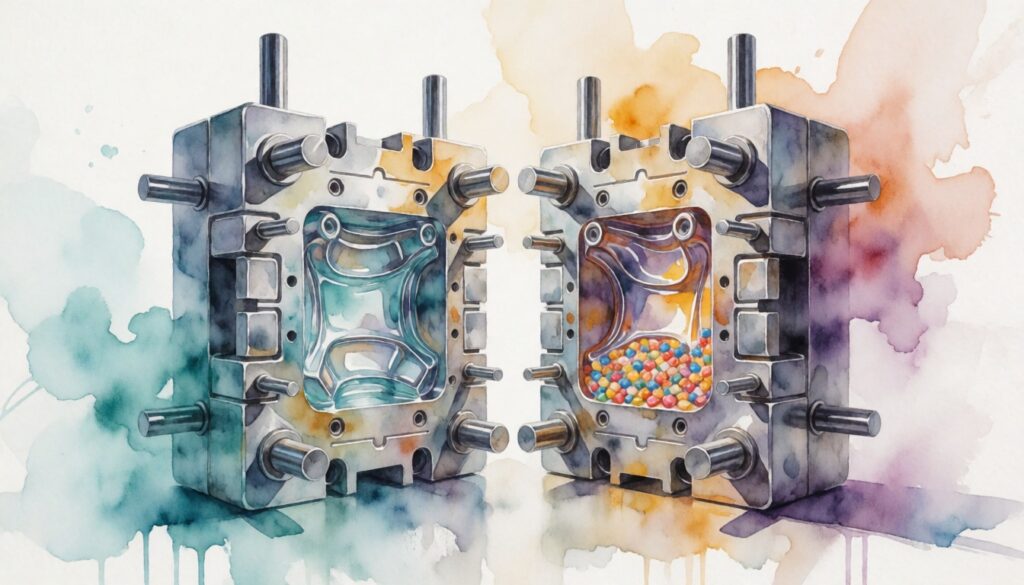
Introduction to Injection Molds for Plastic
Injection molding remains the backbone of modern manufacturing, and the tooling that makes it possible — precision-engineered injection molds for plastic — determines whether a product launch succeeds or stalls. From medical device housings to automotive trim, consumer electronics, and packaging, nearly every high-volume plastic part on the market today was shaped by a mold cut to tolerances measured in microns. In 2026, as reshoring accelerates and lead times tighten, understanding how these molds are designed, sourced, and optimized has become a competitive advantage rather than a technical footnote.
Understanding why injection molds for plastic matters for modern growth
A mold is not a disposable accessory; it is a capital asset that defines your unit economics for years. The cavity count, steel grade, cooling layout, and gate design all influence cycle time, scrap rate, and part quality. Companies that treat tooling as a strategic investment routinely achieve lower cost-per-part, faster ramp-up, and greater design freedom than competitors who source molds purely on lowest-bid pricing. When you control the mold, you control the manufacturing roadmap.
Key market trends and foundational concepts
Several shifts define the 2026 tooling landscape:
- Speed-to-market pressure. Brands now expect prototype iterations within days, not months, driving demand for rapid tooling and bridge molds.
- Material diversification. Engineering resins, glass-filled nylons, and high-temperature polymers demand more robust plastic injection molds with hardened steels and optimized thermal management.
- Micro and compact tooling. Miniaturized consumer devices have created strong demand for compact, high-cavitation molds built for tight spaces.
- Data-driven mold validation. Simulation software, in-mold sensors, and mold-flow analysis are now standard in serious tooling programs.
- Sustainability requirements. Recycled-content resins and lightweighting strategies change how cavities, vents, and cooling channels must be designed.
Foundational concepts every buyer should know include the difference between a two-plate and three-plate mold, hot runner versus cold runner systems, draft angle requirements, shrink rate compensation, and the role of the metal mold bases that anchor every cavity insert and ejector system.
How COMEKIN optimizes this strategy
COMEKIN approaches tooling as an engineering partnership, not a transactional order. Every project begins with part analysis, material consultation, and DFM feedback, ensuring that the mold design supports the customer’s actual production targets. By combining in-house CNC machining tooling with rigorous quality control, COMEKIN delivers molds that hold tolerance through hundreds of thousands of cycles — and provides prototype parts so teams can validate fit and function before committing to full-scale tooling.
Core Benefits & Strategic Importance
Driving targeted audience engagement
For manufacturers and product teams, the "audience" is internal: engineers, procurement leads, and production managers who need confidence in the tooling supply chain. A well-documented mold program — complete with design reviews, steel certifications, and trial reports — engages those stakeholders and eliminates the friction that stalls approvals. Clear communication about cycle times, cavitation strategy, and maintenance intervals keeps projects moving and reduces costly redesign loops.
Maximizing ROI and conversion efficiency
Tooling ROI is measured in three ways: cost per part, time to first article, and mold lifespan. Optimizing each requires deliberate choices:
- Cavitation strategy. Matching cavity count to annual volume avoids over-tooling on low-demand parts and under-tooling on high-runners.
- Cooling optimization. Conformal cooling and properly placed baffles can cut cycle time by 15–40%, directly reducing unit cost.
- Steel selection. P20 for moderate volumes, H13 or S136 for abrasive or high-volume applications.
- Standardized components. Using standardized bases and ejector systems shortens build time and simplifies future maintenance.
When these levers are pulled together, the result is a mold that pays for itself faster — often within the first production run for high-volume parts. For teams producing small or intricate components, compact solutions like those in COMEKIN’s guide to best injection plastic molds for small spaces demonstrate how thoughtful design unlocks efficiency where floor space is limited.
Avoiding common pitfalls and mistakes
Tooling failures rarely happen by accident. The most frequent and expensive errors include:
- Skipping DFM review. Undercuts, thin walls, and uneven wall thickness cause warping and short shots that no amount of molding pressure fixes.
- Ignoring shrink compensation. Each resin shrinks differently; assuming a universal value produces out-of-spec parts.
- Poor venting. Trapped gas causes burns, weld lines, and surface defects.
- Underestimating maintenance. Molds are wear items. Without a preventive maintenance schedule, cycle times drift and quality degrades.
- Choosing suppliers on price alone. The cheapest quote often hides thin steel, inadequate cooling, or missing spare inserts.
On the production support side, secondary operations matter too. Proper drilling and grinding of mold components directly affect alignment, shutoff accuracy, and overall tool life, which is why integrated machining capability is a meaningful differentiator.
Step-by-Step Implementation Guide
Initial audit and foundational setup
Before cutting steel, establish a clear baseline:
- Define part requirements. Material, annual volume, tolerance class, cosmetic expectations, and regulatory constraints.
- Review the CAD model. Run mold-flow simulation and DFM analysis to catch design risks early.
- Select the tooling tier. Prototype, bridge, or production tooling — each has different cost and lifespan profiles.
- Specify the mold base and steel. Document cavitation, runner type, ejection method, and cooling layout.
- Set the commercial framework. Agree on milestones, trial approvals, documentation, and warranty terms.
A thorough audit at this stage prevents 80% of downstream problems. For teams unfamiliar with the tooling ecosystem, broader resources such as guides to hardware molds clarify how different mold categories fit different product families.
Executing high-impact action items
Once the foundation is set, focus on execution discipline:
- Design review sign-off. Freeze the design only after cross-functional approval.
- Progressive tool build. Machine bases and inserts in parallel, then fit and assemble.
- T1 sampling. Run first-article trials and measure every critical dimension against the drawing.
- Iterate with documentation. Log every change with a reason and a measured result.
- Qualify the process. Establish a validated window for injection pressure, hold time, and cooling duration.
Companies producing packaging or hollow parts should also examine adjacent technologies; COMEKIN’s overview of Ace Hardware blow molds illustrates how molding families differ and where injection molding still wins on precision and surface finish.
Measuring performance and scaling results
Metric discipline separates good programs from great ones. Track:
- Cycle time against simulation targets
- Scrap rate per shift and per cavity
- OEE for the molding cell
- Tool maintenance cost per 100,000 cycles
- Time from PO to first article
Then scale deliberately. Proven designs can be duplicated into multi-cavity or family molds, or transferred to additional presses. Where precision is critical, pairing advanced mold design with refined angular grinding techniques for insert finishing keeps shutoffs sharp and dimensions repeatable over long production runs.
Conclusion & Key Takeaways
Injection molds for plastic are the single greatest determinant of manufacturing cost, quality, and speed in most plastic-part businesses. The companies that win in 2026 are the ones that treat tooling as engineering — investing in DFM, cooling optimization, correct steel selection, disciplined validation, and preventive maintenance — rather than as a one-time purchase.
Key takeaways:
- Molds are capital assets; their design drives unit economics for years.
- Early DFM and simulation work eliminates the most expensive failure modes.
- Cavitation, cooling, and steel selection should match real production volume.
- Measurement and documentation turn one successful tool into a repeatable program.
- Partnering with an integrated manufacturer shortens lead times and improves accountability.
Next steps: Audit your current tooling portfolio, identify the highest-cost or lowest-yield mold, and commission a DFM review. Whether you need prototype validation through prototype parts, production-ready plastic injection molds, or supporting CNC machining tooling and hardware molds, COMEKIN delivers the engineering depth to move from concept to consistent production — on schedule and on specification.