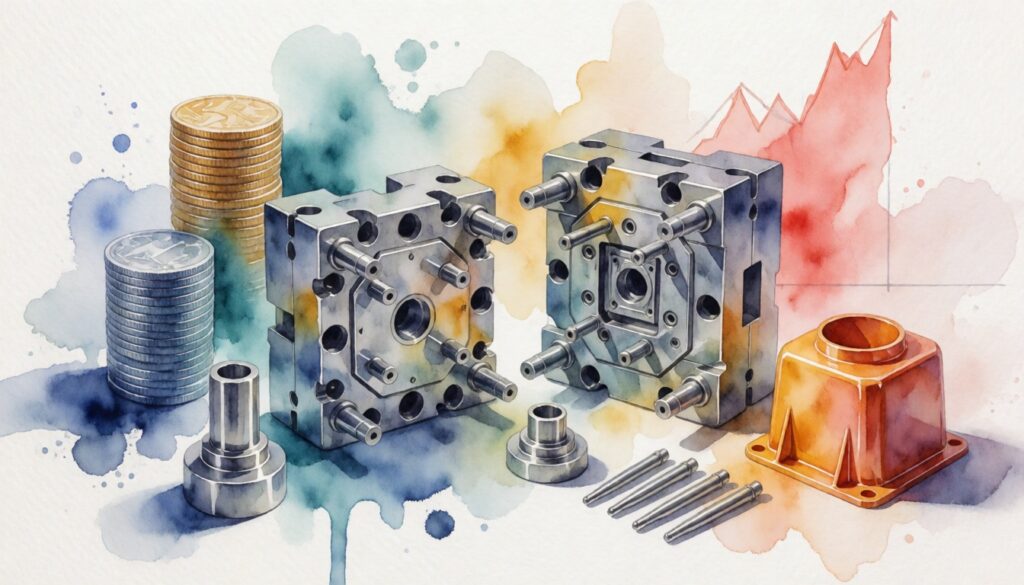
Introduction to Plastic Injection Molds Cost
Understanding plastic injection molds cost is one of the most consequential budgeting decisions a product team can make. Whether you are launching a new consumer product, scaling an existing line, or evaluating a switch from CNC-machined prototypes to full production, the price of your mold tooling shapes your unit economics, your break-even timeline, and ultimately your ability to compete. In 2026, with resin prices stabilizing, automation maturing, and global supply chains recalibrating, accurate cost modeling has become a genuine competitive advantage rather than a back-office exercise.
This guide breaks down the real drivers behind plastic injection molds cost, the strategic benefits of getting your estimates right, and a practical implementation framework that manufacturers like COMEKIN use to help clients reduce tooling spend without sacrificing quality.
Why Plastic Injection Molds Cost Matters for Modern Growth
Mold cost is rarely a one-time expense. It is the anchor of your entire production plan. A well-engineered tool amortized over hundreds of thousands of cycles can drive per-part costs down to pennies. A poorly specced mold, by contrast, can lock you into expensive maintenance, slow cycle times, and premature replacement. For startups, that difference often determines whether a product launch succeeds or stalls. For established OEMs, it dictates margin performance across an entire product family.
Key Market Trends and Foundational Concepts
Several forces are reshaping tooling economics in 2026:
- Material costs are the biggest variable. Steel grades, hardness, and cavity counts often account for 30–50% of total mold price.
- Automation and simulation (mold flow analysis, CAD-driven design) are compressing engineering hours and reducing trial-and-error costs.
- Reshoring and nearshoring trends are pushing buyers to compare domestic tool shops against overseas suppliers more carefully, factoring in lead time, communication, and quality risk.
- Prototype-to-production pathways are becoming smoother, letting teams validate designs with Prototype parts before committing to expensive steel.
Foundationally, a mold’s cost is driven by four levers: part geometry, material selection, production volume, and required precision. Master those and you control the budget.
How COMEKIN Optimizes This Strategy
COMEKIN approaches tooling as an engineering partnership rather than a transactional quote. By combining Hardware molds, Plastic injection molds, and Metal mold bases under one roof, the company aligns design, tooling, and production so clients avoid the costly handoffs that inflate plastic injection molds cost. The result is a shorter path from concept to repeatable, profitable production.
Core Benefits & Strategic Importance
Driving Targeted Audience Engagement
For product managers and procurement leaders, transparent mold costing builds trust. Publishing accurate ranges, explaining what changes a quote, and showing the tradeoffs between a two-cavity prototype tool and a 32-cavity hardened-steel production mold all position your brand as a genuine authority. That authority attracts the right buyers—engineers and decision-makers who value precision over hype.
Maximizing ROI and Conversion Efficiency
Every dollar saved on tooling is a dollar available for marketing, inventory, or R&D. Efficient mold design also reduces cycle time, which lowers per-part cost and improves cash flow. Teams that invest in CNC machining tooling for pre-production validation often catch design flaws before steel is cut, avoiding the single most expensive mistake in the entire process: reworking a finished mold.
Avoiding Common Pitfalls and Mistakes
The most frequent cost traps include:
- Over-tooling for low volumes. A hardened 16-cavity mold for a 5,000-unit run is almost always a waste.
- Under-tooling for high volumes. Soft aluminum tooling wears out fast under millions of cycles.
- Ignoring part design. Sharp corners, uneven wall thickness, and unnecessary undercuts inflate cost dramatically.
- Skipping simulation. Mold flow analysis is cheap; a warped part on a finished tool is not.
- Forgetting maintenance. A mold is an asset that needs scheduled care, just like any precision tool. Readers interested in adjacent topics like surface finishing and tool maintenance will find value in our guides on The Ultimate Guide to Grinding in 2026 and The Ultimate Guide to Angular Grinding in 2026, which cover the precision work that keeps molds performing.
Step-by-Step Implementation Guide
Initial Audit and Foundational Setup
Before requesting quotes, do your homework.
- Define your part and volume. Annual volume, target cycle time, and resin choice drive everything.
- Audit your CAD. Simplify geometry where possible. Every extra feature adds machining hours.
- Decide your cavity count. Balance tooling cost against per-part savings.
- Select materials thoughtfully. P20, H13, S136, and beryllium copper all behave differently.
- Validate with prototypes. Use Prototype parts to test fit, form, and function before cutting steel.
This audit produces a realistic spec sheet, which is the single best tool for getting accurate quotes.
Executing High-Impact Action Items
With your spec ready, move into execution:
- Request itemized quotes. Ask suppliers to break out design, steel, machining, finishing, and testing. Itemization reveals where cost actually lives.
- Run mold flow analysis. This catches filling, cooling, and warping issues before they become expensive.
- Standardize mold bases. Using Metal mold bases with standard dimensions cuts machining time and simplifies future maintenance.
- Pair tooling with process. Combine mold design with CNC machining tooling for pilot runs, and align drilling, grinding, and finishing steps with specialized equipment. Our Drilling: Types, Methods, and How COMEKIN Provides High-Performance Drilling Solutions article is a useful reference for the holemaking and cooling-channel work that mold blocks require.
- Plan for maintenance from day one. Document every cycle, schedule inspections, and keep spare inserts for high-wear areas.
If your product is compact or space-constrained, review Best Injection Plastic Molds for Small Spaces in 2026: Compact Solutions by COMEKIN for design strategies that reduce footprint without sacrificing output.
Measuring Performance and Scaling Results
Once tooling is live, track the metrics that matter:
- Cost per part (tooling amortization + resin + cycle time + labor)
- Cycle time and scrap rate
- Mold uptime and maintenance frequency
- Time to first article and time to full production
When these metrics stabilize, scaling becomes straightforward: add cavities, duplicate hot halves, or invest in a second tool. For teams exploring blow molding as an alternative process, our guide on The Ultimate Guide to Ace Hardware Blow Molds in 2026 provides a useful comparison point on hollow-part economics.
Conclusion & Key Takeaways
Plastic injection molds cost is not a single number—it is the sum of design decisions, material choices, volume assumptions, and process discipline. Controlling it requires an engineering mindset, not just a purchasing one. The teams that win in 2026 will be the ones that validate early, simulate thoroughly, standardize components, and treat tooling as a long-term asset rather than a one-time purchase.
Key takeaways:
- Cost drivers are geometry, material, volume, and precision—master these four levers.
- Prototyping before tooling prevents the most expensive rework in the industry.
- Standard mold bases, simulation, and disciplined maintenance reduce lifetime cost dramatically.
- COMEKIN’s integrated approach to Hardware molds, Plastic injection molds, and CNC machining tooling helps teams move from concept to production with fewer surprises and lower total cost.
Actionable next steps:
- Audit your current or planned part design against the checklist above.
- Request itemized quotes from at least three tool shops.
- Validate with prototype runs before committing to hardened steel.
- Build a maintenance schedule into your production plan from day one.
- Revisit your tooling strategy annually as volumes and materials evolve.
Get the fundamentals right, and plastic injection molds cost becomes a predictable, manageable line item—one that supports growth instead of limiting it.