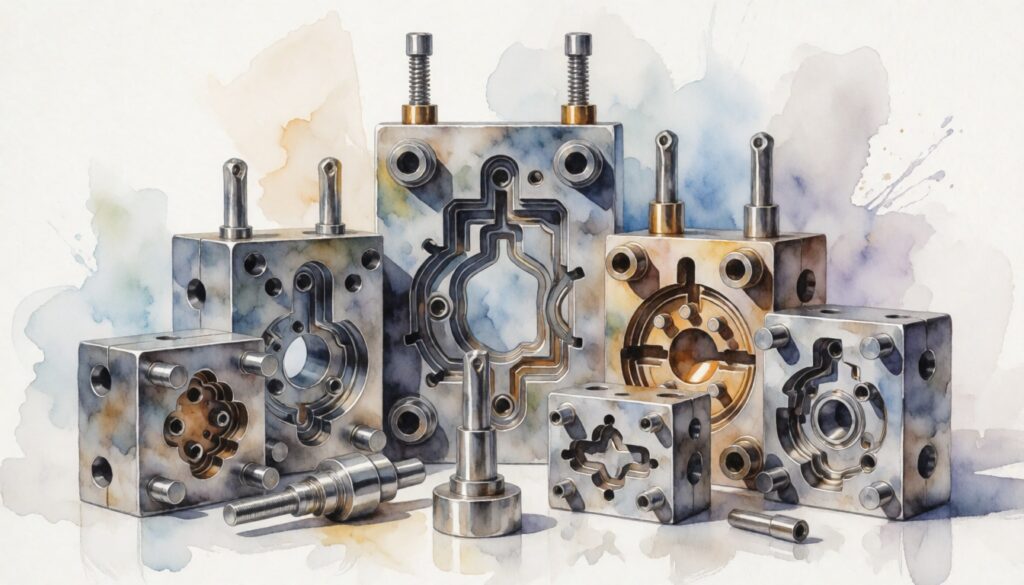
Introduction to Used Plastic Injection Molds For Sale
In 2026, manufacturers are under pressure to launch products faster, control tooling costs, and adapt to shifting supply chains. For OEMs, contract molders, and product development teams, used plastic injection molds for sale have become a strategic asset rather than a fallback option. A well-vetted used mold can reduce tooling lead times from months to weeks, lower capital expenditure by 30–70%, and provide a proven production path for legacy parts, bridge volumes, and niche product lines.
The market for used molds is also maturing. Digital inspection tools, 3D scanning, CAD verification, and global logistics have made it easier to source, evaluate, and refurbish tooling from North America, Europe, and Asia. At the same time, buyers must separate genuine bargains from costly liabilities. That is where a technical partner like COMEKIN becomes valuable. COMEKIN combines mold sourcing, engineering review, refurbishment planning, and production validation to help manufacturers turn used tooling into reliable manufacturing assets.
Why Used Plastic Injection Molds For Sale Matter for Modern Growth
Modern growth depends on speed, capital efficiency, and supply chain resilience. New molds can take 8–16 weeks or longer to design, machine, trial, and qualify. Used molds can often be inspected, refurbished, and sampled in a fraction of that time. This speed matters for:
- Bridge production: Meet customer demand while a new tool is being built.
- Low-volume and specialty parts: Avoid over-investing in a new tool for limited runs.
- Legacy components: Keep older products in service when original tooling is unavailable.
- Market testing: Validate a product before committing to high-volume tooling.
- Reshoring and localization: Move production closer to demand without starting from zero.
Used molds also support sustainability goals. Reusing existing tool steel, mold bases, and components reduces the embodied energy and raw material consumption associated with new tooling. When refurbished correctly, a used mold can deliver thousands or millions of additional cycles.
Key Market Trends and Foundational Concepts
Several trends are shaping the used mold market in 2026:
- Digital inspection and verification: 3D scanning, CMM reports, and CAD overlays help confirm dimensions, shutoffs, and core/cavity geometry before purchase.
- Tool steel traceability: Buyers increasingly request steel grades, hardness data, and maintenance history.
- Hot runner modernization: Older hot runner systems may be obsolete or energy-inefficient; replacements can improve cycle times and reduce scrap.
- Compact and micro-molding demand: Space-saving molds and small-footprint tools are in high demand. For teams exploring compact solutions, Best Injection Plastic Molds for Small Spaces in 2026 offers useful context.
- Refurbishment over replacement: Polishing, welding, inserts, and new Metal mold bases can extend tool life at a fraction of new tool cost.
Foundational concepts every buyer should understand include cavitation, runner type, mold base size, press compatibility, tonnage requirements, cooling layout, ejection strategy, and material compatibility. These factors determine whether a used mold will run efficiently in your facility—or sit idle.
How COMEKIN Optimizes This Strategy
COMEKIN approaches used mold sourcing as an engineering project, not a simple transaction. The process typically includes:
- Reviewing part drawings and production requirements.
- Matching tooling to available press tonnage, tie-bar spacing, and platen size.
- Inspecting Hardware molds, Plastic injection molds, and related tooling for wear, cracks, corrosion, and dimensional drift.
- Quoting refurbishment, replacement inserts, hot runner upgrades, and surface refinishing.
- Coordinating sampling, first article inspection, and production validation.
By combining sourcing, CNC machining tooling, and project management, COMEKIN helps buyers avoid the hidden risks that make used molds fail.
Core Benefits & Strategic Importance
Driving Targeted Audience Engagement
For B2B buyers, technical transparency drives trust. A used mold listing that includes steel type, cavitation, cycle history, press size, and known defects is far more engaging than a vague “used mold for sale” post. Manufacturers want to know:
- What parts can this mold produce?
- What resin was it last run with?
- What maintenance has been performed?
- What is the expected remaining tool life?
- What refurbishment is required for my application?
COMEKIN addresses these questions with inspection reports, engineering recommendations, and clear scope-of-work documentation. That level of detail reduces friction, accelerates decision-making, and positions used molds as legitimate production assets.
Maximizing ROI and Conversion Efficiency
The financial case for used plastic injection molds for sale is compelling when the tool is correctly matched to the application. Key ROI drivers include:
- Lower upfront tooling cost: Savings of 30–70% compared to new molds.
- Faster time-to-market: Weeks instead of months for many projects.
- Reduced engineering risk: Proven geometry and production history.
- Scalable capacity: Add duplicate tools or refurbish existing ones as demand grows.
- Lower scrap and cycle time: Modernized cooling, hot runners, and surface finishes can improve output.
For high-volume programs, new tooling may still be the right choice. But for bridge production, low-volume runs, spare capacity, and legacy parts, used molds often deliver the best return. Pairing used molds with Prototype parts can also de-risk product launches before full production.
Avoiding Common Pitfalls and Mistakes
Not every used mold is a bargain. Common mistakes include:
- Buying without a physical or digital inspection.
- Assuming the mold fits your press without checking tonnage, tie bars, and platen patterns.
- Ignoring worn shutoffs, cracked cores, or corroded waterlines.
- Underestimating hot runner replacement costs.
- Failing to verify material compatibility and cooling requirements.
- Skipping a trial run before committing to production.
Refurbishment is often where hidden costs appear. Worn surfaces may require welding, remachining, or polishing. For repair and surface restoration guidance, The Ultimate Guide to Grinding in 2026 explains how precision grinding supports mold maintenance. Cooling channel issues may also require drilling or rework; Drilling: Types, Methods, and How COMEKIN Provides High-Performance Drilling Solutions covers related machining considerations.
Step-by-Step Implementation Guide
Initial Audit and Foundational Setup
Start with a clear production brief. Define the part, annual volume, resin, color, tolerance, surface finish, and press specifications. Then audit potential used molds against those requirements.
Your audit should include:
- Mold dimensions, weight, and press compatibility.
- Cavitation and runner configuration.
- Steel grade, hardness, and corrosion condition.
- Core, cavity, slide, lifter, and ejector condition.
- Cooling circuit integrity and flow testing.
- Hot runner brand, controller compatibility, and spare parts availability.
- Documentation, including drawings, maintenance logs, and sampling reports.
COMEKIN can support this stage with engineering review and sourcing across hardware molds, injection molds, and related tooling.
Executing High-Impact Action Items
Once a mold passes the initial audit, move into execution:
- Negotiate scope and price: Include refurbishment, shipping, and trial costs.
- Plan refurbishment: Replace worn inserts, repair cracks, polish surfaces, and update hot runners if needed.
- Verify fit and function: Confirm dimensions, waterlines, ejection, and safety systems.
- Run a trial: Use production resin and representative process settings.
- Inspect first articles: Check critical dimensions, appearance, and cycle consistency.
- Document the process: Record setup sheets, maintenance tasks, and spare parts.
For compact or space-constrained applications, review Best Injection Plastic Molds for Small Spaces in 2026 before finalizing your tooling strategy.
Measuring Performance and Scaling Results
After the mold enters production, track KPIs such as cycle time, scrap rate, downtime, maintenance cost, and overall equipment effectiveness (OEE). Compare performance against the business case. If the used mold meets targets, consider:
- Purchasing duplicate tools for capacity.
- Standardizing mold bases and components.
- Scheduling preventive maintenance.
- Upgrading cooling or hot runner systems.
- Expanding to additional product variants.
For surface finishing and repair optimization, The Ultimate Guide to Angular Grinding in 2026 provides additional technical depth. The goal is not just to buy a used mold—it is to build a repeatable, cost-effective tooling strategy.